Prince George’s County Court maintains and manages all official legal records for civil, criminal, family, and probate cases within the county. These records serve as an authoritative source of information for anyone seeking details about legal proceedings, case outcomes, or historical filings. Court records include documents such as dockets, motions, judgments, and certified filings, all preserved under Maryland’s public records law. Residents, attorneys, researchers, and businesses often reference these documents to verify case details, track legal status, or gather information for property, employment, or background checks. The court ensures that information is organized systematically, allowing users to find the records they need efficiently. Legal transparency is a key principle, which means many records are available for public viewing either online or through in-person requests. By maintaining accurate and up-to-date documents, Prince George’s County Court helps the community and legal professionals access reliable data for personal, professional, and academic purposes.
Accessing court records can clarify case outcomes, provide insights into ongoing legal matters, and support informed decision-making. For example, individuals may check civil case results to resolve property disputes or family law cases to confirm custody arrangements. Criminal case records help track charges, sentencing, or parole details, while probate documents outline estate settlements and property transfers. Court records also serve as historical references for journalists, historians, and legal scholars researching local case trends. The court maintains strict protocols to protect sensitive information while fulfilling public access obligations. Users will find this page useful for identifying the types of available records, understanding how to request or retrieve documents, and locating official sources to confirm data. Through structured access to dockets, filings, and judgments, Prince George’s County Court ensures accountability and legal transparency while supporting the public’s need for factual, up-to-date information.
How to Search Prince George’s County Court Records
Searching Prince George’s County court records can be done both online and in-person. These records include civil, criminal, family, and probate cases. Using official resources ensures accurate and up-to-date information. Below is a complete guide for anyone performing a Prince George’s County case search.
Identify the Record Type
Knowing the record type saves time and ensures accurate results. Also, identify the relevant court division (Circuit, District, or Probate Court). This helps in locating the correct case files whether online or in-person. Before searching, determine which type of case record you need:
- Civil Cases – Lawsuits between individuals or businesses. Examples: contract disputes, personal injury, or small claims.
- Criminal Cases – Cases involving criminal charges, sentencing, or appeals.
- Family Cases – Divorce, child custody, or support cases.
- Probate Cases – Wills, estates, guardianships, or trust matters.
Use the Official Maryland Judiciary Case Search
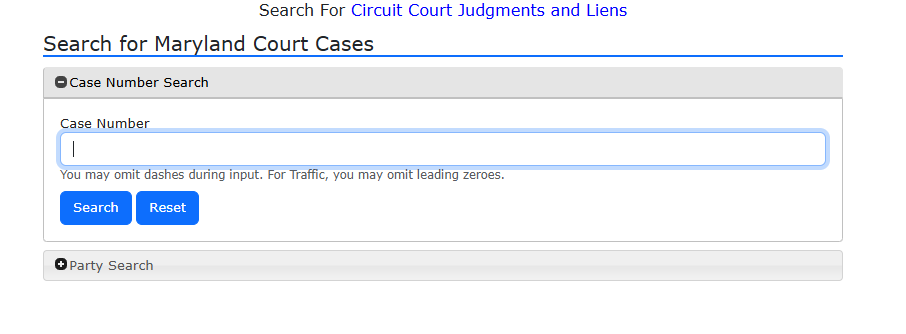
The official Maryland Judiciary Case Search is the primary online tool for checking court records. It provides real-time updates from Prince George’s County Court.
Official Site URL: https://casesearch.courts.state.md.us/casesearch/
Instructions for Using the Tool:
- Open the Official Maryland Judiciary Case Search by visiting the naked URL:
https://casesearch.courts.state.md.us/casesearch/ - Select Search Criteria:
- Case Type: Civil, Criminal, Family, or Miscellaneous.
- Court: Choose Prince George’s County Circuit Court or District Court.
- Search By: Name of party, Case Number, or Business Name.
- Enter Search Information:
- For Name Search: Enter first and last names accurately. Use wildcard (*) if unsure of spelling.
- For Case Number Search: Enter the full case number exactly as it appears.
- For Court Type: Ensure you match the type of case (civil, criminal, etc.).
- View Search Results:
- A list of matching cases appears with the Case Number, Parties Involved, Case Status, and Filing Date.
- Click the case number to view detailed information such as dockets, hearings, motions, and judgments.
- Access Documents:
- Some case documents are available as PDFs directly through the online portal.
- For restricted or sealed files, the system will display a message explaining how to request access through the Clerk of Court Office.
- Print or Save Records:
- Users can save PDF copies for personal reference or print them for official use.
Search Through the Clerk of Court Office
For records not available online:
- Contact the Clerk of Court via phone, email, or in-person.
- Provide full names, case numbers, or court division details.
- Ask staff about availability, viewing restrictions, and fees for copies.
- They can help locate historical records, sealed case files, or older documents not digitized online.
In-Person Record Search at Courthouse
- Visit the Prince George’s County Courthouse in person.
- Bring photo identification and any case details (names, numbers, or court type).
- Use public terminals to perform electronic searches.
- Staff can guide you to physical case files if they are not online.
- Note that some records may require a formal request before viewing.
Request Certified Copies
- Certified copies carry the court’s official seal and signature.
- Required for legal proceedings, property transactions, or official verification.
- Submit a written request to the Clerk of Court Office or request in person.
- Include case number, parties involved, and type of certified copy needed.
- Pay any applicable fees (varies by record type).
- Certified copies are generally mailed or available for pickup depending on the request method.
Types of Court Records Available in Prince George’s County
Prince George’s County Court Records cover a wide range of legal matters, giving the public and legal professionals detailed information about cases filed and resolved in the county. These records are maintained by the county court system and can be accessed online or in person through official channels. Understanding the types of records available helps users identify which documents are relevant to their needs, whether for legal, personal, or research purposes.
Criminal Court Records
Criminal court records in Prince George’s County provide comprehensive details about criminal cases, including arrests, charges, pre-trial proceedings, hearings, and sentencing. They often include warrants, probation or parole information, plea agreements, and the final outcomes of cases. These records are crucial for law enforcement agencies, legal professionals, and the public who wish to verify an individual’s criminal history or follow the progression of a case. Users can find case numbers, the names of defendants and victims, specific charges, court dates, and disposition outcomes. Maryland’s public records laws regulate access to criminal records to balance transparency with privacy, ensuring sensitive information like juvenile records or sealed cases is appropriately protected.
Civil Court Records
Civil court records document legal disputes between individuals, businesses, or organizations, ranging from contract disagreements to property disputes, personal injury claims, and monetary judgments. These records detail case filings, motions, hearings, mediation efforts, settlements, and court rulings. They serve as a vital resource for attorneys preparing cases, researchers analyzing legal trends, and individuals seeking to verify judgments or track ongoing disputes. Accessing civil court records allows users to view critical documents such as complaints, summons, court orders, and final verdicts. Many of these records are available online, while certain sensitive documents may require in-person review at the Clerk of Court Office.
Family Court Records
Family court records cover a range of domestic and family-related legal matters, including divorce filings, child custody arrangements, visitation schedules, child support orders, adoption proceedings, and protection orders. These records also include details on domestic relations disputes and family court interventions aimed at resolving conflicts. While some family court documents are publicly accessible, sensitive information related to minors or private family matters may be restricted or partially redacted. Family court records are essential for individuals confirming legal responsibilities, monitoring case progress, or enforcing court-issued rulings. They also provide attorneys and mediators with critical insights into family law cases to support legal advice and advocacy.
Traffic & Minor Offenses
Traffic and minor offense records include citations, traffic violations, parking infractions, local ordinance violations, and minor criminal charges such as disorderly conduct. These records provide details about fines, penalties, points assessed, court hearings, and resolution outcomes. They are valuable for individuals checking their driving records, employers conducting pre-employment background checks, insurance providers, and attorneys representing clients in traffic or municipal court cases. Users can access information such as citation numbers, offense descriptions, payment history, and scheduled court dates. Many of these records are available online via the county’s official case search tool, making it convenient for residents to track and manage their legal obligations.
Probate & Estate Records
Probate and estate records document the legal management and distribution of a deceased person’s property under court supervision. These include wills, estate administration filings, guardianships, trusts, and related court rulings. Probate records provide detailed information such as filing dates, executor or personal representative names, estate inventories, debt settlements, and the final distribution of assets. Accessing these records helps heirs, attorneys, and financial institutions confirm property ownership, track legal transfers, resolve disputes, and ensure compliance with court orders. Probate records also serve as an important resource for genealogists and researchers tracing family histories, offering insights into estate arrangements and legal matters affecting deceased individuals.
Official Resources for Prince George’s County Court Records
Residents and researchers can review Prince George’s County court records through trusted state and local government sources. These official systems provide reliable case details, filing dates, and docket updates for civil, criminal, and family matters within Maryland courts. Accurate public record searches begin with government-managed databases. Each platform listed below offers verified information, clear search tools, and regular updates. Using official sources lowers the risk of outdated or incorrect data and supports informed legal research.
Maryland Judiciary Case Search
The Maryland Judiciary Case Search serves as the primary online database for public court information across Maryland. Users can search by name, case number, or filing date to review case status, charges, court schedules, and dispositions. Search results update frequently, which helps users confirm recent filings or court activity. The database remains free to use and works on most devices, making it the fastest method for public record review. For deeper research, users may compare multiple name spellings or narrow results by county. This improves accuracy and reduces unrelated matches.
This system covers:
- District and Circuit Court records
- Civil, criminal, and traffic cases
- Party names, hearing dates, and judgments
Prince George’s County Clerk of Court
The Prince George’s County Clerk of the Circuit Court maintains official filings, certified copies, and archived case documents. Visitors may request records in person, by mail, or through approved online services. Certified copies often require a small fee and valid identification. Processing times vary based on record age and format. Older files stored off-site may take longer to retrieve. Direct contact with the clerk’s office helps confirm record availability before visiting. Staff members can explain request steps and accepted payment methods.
Common record requests include:
- Civil case filings and judgments
- Criminal case documents and sentencing records
- Marriage licenses and land records
- Probate and estate filings
State and Local Government Record Portals
Maryland provides several digital portals that connect users to court-related public information. These systems support transparency and simplify document searches across agencies. These platforms work alongside county offices and provide consistent statewide coverage. Checking both state and county databases often produces the most complete results.
Key government resources include:
| Portal | Purpose | Record Types |
|---|---|---|
| Maryland Judiciary website | Court services and forms | Opinions, rules, forms |
| Maryland Land Records | Property ownership history | Deeds, liens, plats |
| Maryland Case Management systems | Case tracking tools | Dockets, filings, schedules |
Third-Party Public Record Databases
Some private websites compile Maryland court data into searchable reports. These services may help users perform broad background checks or multi-county searches in one place. Users should confirm any findings through government sources before relying on the information for legal or employment decisions. Official Maryland systems remain the most accurate reference for court activity.
Key points about third-party databases:
- Data may lag behind official court updates
- Fees often apply for full reports
- Record completeness varies by provider
What is Maryland Judicial System
Maryland’s judicial system organizes legal cases through a clear court structure that handles everything from minor disputes to serious criminal trials. Prince George’s County courts operate within this statewide framework, following the same rules, procedures, and appeal paths used across Maryland. Each court level serves a different role in reviewing evidence, applying state law, and resolving disputes. Knowing how these courts connect helps residents track case progress and choose the correct court for filings or appeals.
Structure of Maryland Courts
Maryland divides its court system into trial courts and appellate courts. Trial courts review facts and hear testimony, while appellate courts review legal decisions from lower courts. This two-level structure helps keep rulings fair and consistent across the state. It gives parties a clear path to challenge errors without restarting the entire case.
District Court
The District Court of Maryland handles many everyday legal matters. These cases move quickly and usually do not involve juries. Every Maryland county, including Prince George’s County, has at least one District Court location. This court often serves as the first step in the legal process.
Common District Court case types include:
- Traffic violations and minor criminal charges
- Landlord–tenant disputes
- Small claims and civil cases with lower dollar amounts
- Protective orders and preliminary hearings
Circuit Court
The Circuit Court for Prince George’s County is a higher trial court with broader authority. It hears serious criminal cases, major civil lawsuits, and family law matters such as divorce or child custody. Circuit Courts maintain detailed records and longer case timelines. Many cases that begin in District Court may move here through appeal or transfer.
Key responsibilities include:
- Jury trials in criminal and civil cases
- Appeals from District Court decisions
- Probate, guardianship, and complex civil litigation
Appellate Courts
Maryland’s appellate level reviews whether trial courts applied the law correctly. These courts do not retry facts or hear new witnesses. Decisions from the state’s highest court shape how Maryland law applies in future cases.
The two appellate courts are:
- Appellate Court of Maryland – Reviews most appeals from Circuit Courts.
- Supreme Court of Maryland – Reviews select cases that involve major legal questions or statewide impact.
How Prince George’s County Courts Fit into State System
Prince George’s County courts function as part of the unified Maryland Judiciary. Local courts follow statewide rules for filings, hearings, and recordkeeping, which keeps legal processes consistent from county to county. This structured process supports fairness, transparency, and reliable legal outcomes across Maryland. Understanding where Prince George’s County courts fit within this system helps residents follow case progress and prepare for each stage of the legal process.
A typical case path may look like this:
- Filing begins in District Court or Circuit Court, based on case type.
- Trial court issues a judgment or order.
- A party may file an appeal with the Appellate Court of Maryland.
- Select cases may move to the Supreme Court of Maryland for final review.
How to Access Public Court Records Legally
Maryland law allows the public to view many court records while protecting sensitive information. Clear rules explain which legal records are open, which remain restricted, and what costs may apply for copies. Following state procedures helps prevent denied requests or privacy violations. The sections below explain the main laws, limits, and payment details tied to court record viewing in Prince George’s County and across Maryland.
Maryland Public Information Act
The Maryland Public Information Act gives the public the right to request government records, including many court documents. This law promotes transparency by requiring agencies to share non-confidential information within set timeframes. Courts follow separate judicial rules for many case files, yet the MPIA still shapes how government offices release related materials. Knowing this law helps requesters choose the correct office and format for their request.
Key points of the MPIA include:
- Written requests may be required for certain documents
- Agencies must respond within a defined period
- Some records may be partially redacted to protect privacy
Privacy Rules & Restricted Records
Not every court record is open for public viewing. Maryland restricts files that contain sensitive personal or legal details. Courts balance transparency with privacy protection. Judges may seal records or limit viewing when disclosure could cause harm or interfere with justice. Anyone seeking case information should confirm whether a file is public before submitting a request. This step saves time and avoids unnecessary fees.
Common restricted records include:
- Juvenile court proceedings
- Adoption and guardianship files with sealed details
- Certain medical or mental health information
- Active investigations or protected witness data
Fees and Copy Requests
Courts may charge small fees for printed or certified copies of legal records. Costs depend on page count, certification type, and retrieval time for archived files. Many clerk offices accept cash, card, or money order. Processing time varies based on request volume and record location. Requesters who prepare case numbers, party names, and filing dates often receive faster service. Clear information reduces staff search time and keeps total costs lower.
Typical payment details include:
- Per-page copy charges
- Extra cost for certified or sealed documents
- Possible search or retrieval fees for older records
Overview of Prince George’s County Court
Prince George’s County Court refers to the group of local courts that handle legal cases under the Maryland courts system. These courts manage criminal charges, civil disputes, family matters, and probate issues for residents within county boundaries. Each court follows statewide rules set by the Maryland Judiciary, which keeps legal procedures consistent across Maryland. Clear jurisdiction levels allow cases to move through the judicial system in an orderly way, from initial filing to possible appeal. Court locations within the county provide public services such as filings, hearings, and certified record requests. Staff members support scheduling, document processing, and courtroom operations. Many services now include online tools that help residents check case status or prepare forms before visiting a courthouse.
What Is Prince George’s County Court
Prince George’s County Court is not a single courtroom. The term describes several trial courts that serve the county within Maryland’s unified judicial structure.
These courts apply state law to local disputes and maintain official records for every filed case. Judges, clerks, and support staff work together to manage hearings, evidence review, and final rulings. Public court operations follow strict procedural rules that protect fairness for all parties. Clear filing systems and scheduled hearings help keep cases moving without unnecessary delay.
Role in Maryland Judicial System
Local courts act as the first point of contact for most legal cases. They apply Maryland statutes, review evidence, and issue rulings that may move to higher courts through appeal.
Trial decisions from county courts may be reviewed by state appellate courts when a party challenges how the law was applied. This process supports fairness and consistent interpretation of Maryland law. County courts also help manage case volume across the state by resolving disputes close to where they arise. This structure improves efficiency and keeps higher courts focused on legal review rather than fact finding.
Jurisdiction and Authority
Jurisdiction defines which cases a court may hear. In Prince George’s County, authority depends on case type, dollar amount, and severity of charges. Clear jurisdiction limits help prevent duplicate filings and speed case handling. Proper case placement allows judges with the right authority to review evidence and issue valid rulings.
General jurisdiction rules include:
- Minor criminal and traffic matters begin in District Court
- Serious criminal trials and major civil lawsuits move to Circuit Court
- Probate and estate matters fall under Orphans’ Court authority
Prince George’s County Courthouse Locations & Contact Information
Prince George’s County offers several courthouse buildings where residents can file cases, attend hearings, and request legal records. Accurate addresses and contact details help visitors reach the correct courtroom, clerk’s office, or service counter without delay. Court facilities operate within the statewide Maryland Judiciary, which keeps procedures consistent across Maryland. The information below lists the primary courthouse sites, nearby service areas, and practical travel details for in-person visits.
Main Courthouse Address
This courthouse sits in Upper Marlboro, the county seat of Prince George’s County. The building houses courtrooms, clerk offices, jury services, family law divisions, and administrative departments. Security screening is required at entry, so early arrival helps prevent missed hearings. Interior signage and information desks direct guests to the correct department or courtroom. The main courthouse for major trials and family law matters is the Circuit Court for Prince George’s County, located at:
14735 Main Street, Upper Marlboro, MD 20772
Visitors typically use this location for:
- Felony criminal jury trials
- Divorce, custody, and major civil cases
- Probate-related filings handled through Circuit Court
- Certified court record and document requests
District Court Locations
Residents from nearby communities such as Bowie, College Park, and Greenbelt commonly use these courthouses for routine hearings and filings. Prince George’s County District Court services operate at two primary addresses under the District Court of Maryland:
Hyattsville District Court
4990 Rhode Island Avenue
Hyattsville, MD 20781
Located near Hyattsville, serving central and northern areas of the county.
Upper Marlboro District Court
14735 Main Street (adjacent courthouse complex)
Upper Marlboro, MD 20772
These locations handle:
- Traffic and misdemeanor criminal cases
- Landlord–tenant disputes
- Small claims and civil matters with lower dollar amounts
- Protective order hearings and initial appearances
Circuit Court Locations
This centralized courthouse supports jury trials, civil processing, criminal scheduling, and family services. Housing multiple court divisions in one complex helps manage high case volume across Prince George’s County. Visitors should confirm courtroom numbers before arrival, since divisions operate on different floors within the same building. All primary Circuit Court proceedings take place at:
14735 Main Street, Upper Marlboro, MD 20772
Contact Numbers, Office Hours, and Departments
Most Prince George’s County court offices operate Monday through Friday, 8:30 a.m. to 4:30 p.m., excluding state holidays. Individual departments such as the clerk’s office, jury administration, and family services maintain separate phone lines for faster assistance.
Frequently Asked Questions
Below are clear answers to common questions about public court records in Prince George’s County, Maryland. These responses explain online search steps, record availability, fees, and request methods using simple, direct language for quick reference.
How can someone search Prince George’s County court records online?
Most online record searches begin with the Maryland Judiciary Case Search website, which provides public case summaries from District and Circuit Courts across Maryland. A user enters a full name, partial name, business title, or known case number into the search fields. The system then displays matching cases that include filing dates, charge descriptions, court locations, hearing schedules, and final outcomes when the information is public. Results often list several people with similar names, so adding a middle initial or birth year helps narrow the list. Some files will not appear if a judge sealed the case or if the law restricts public viewing. Online summaries do not replace certified paperwork. Printed or stamped copies still require a request through the courthouse clerk’s office for official legal use.
Are court records in Prince George’s County open to the public?
Many court records in Prince George’s County remain open for public viewing under Maryland law, especially civil disputes, traffic violations, and most adult criminal proceedings. Public viewers may review docket entries, hearing dates, party names, and final judgments through courthouse terminals or online databases. Certain records stay restricted to protect privacy or safety, including juvenile matters, adoption files, sealed proceedings, and sensitive personal data. Judges hold authority to seal documents when disclosure could cause harm or interfere with justice. Even when a case appears in public search results, some attachments or evidence files may stay limited to court personnel. Full document copies usually require a formal clerk request and valid identification. Availability depends on record category, court rules, and any sealing order issued during the case.
How long does Maryland keep court records on file?
Maryland preserves court records based on statewide retention schedules tied to legal importance and historical value. Serious criminal convictions, major civil judgments, and precedent-setting rulings may remain stored permanently in secure archives. Minor offenses, dismissed cases, or routine administrative matters often follow shorter timelines before archival storage or approved disposal. Many modern filings exist in digital systems, which allows long-term preservation and faster retrieval compared with older paper files. Archived paper records can still be requested, though staff may need extra time to locate and prepare copies. Retention rules apply across all counties, including Prince George’s County, to maintain consistency within the state court system. Anyone seeking an older file should provide detailed case information so clerks can locate the correct archived record without delay.
Is it possible to view criminal case information online?
Public online systems in Maryland display basic details for many adult criminal cases filed in District or Circuit Court. A typical record summary lists charges, court dates, case status, and final disposition when the information qualifies for public viewing. Sealed, expunged, or juvenile cases will not appear in public search results under state privacy rules. Online summaries usually exclude full police reports, witness statements, and evidence exhibits, which remain limited to courtroom use. These databases function as case-tracking tools rather than complete legal files. Anyone needing official proof of a criminal outcome must request certified paperwork from the appropriate clerk’s office. Accurate spelling of names and correct identifying details improve search success and reduce confusion with similar records belonging to different people.
What steps are required to request certified court documents?
Certified court documents come directly from the clerk’s office in the court that handled the original case. A requester typically provides the case number, full party names, and the exact document needed, such as a judgment, docket sheet, or sentencing order. Clerk staff prepare a stamped or sealed copy that confirms the record’s authenticity for legal, employment, or government use. Requests may occur in person, through mail submission, or by approved electronic services when available. Processing time varies depending on record age, archive location, and current office workload. Payment and photo identification are commonly required before release. Certified paperwork carries legal recognition beyond ordinary printouts, which makes it suitable for official verification in courts, licensing agencies, or background review processes.
Do fees apply when searching or requesting court records?
Searching public case summaries through Maryland’s online judiciary database does not require payment, which allows free viewing of basic court information. Fees usually apply only when someone requests printed pages, certified copies, or retrieval of archived physical files from courthouse storage. The total cost often depends on page count, certification type, and staff time needed to locate older materials. Clerk offices accept common payment forms such as cash, credit card, or money order, though options may vary by location. Reviewing case details online before requesting copies can reduce unnecessary printing expenses. Calling the clerk’s office ahead of a visit helps confirm the exact amount owed and prevents delays at the service counter during document pickup.