Prince George’s County Court Docket provides a detailed schedule of all active cases, motions, and hearings within the county’s court system. It serves as an official record that lists upcoming court dates, filings, and legal actions, allowing parties and legal professionals to stay informed about case progress. Each docket entry includes essential details such as case number, filing date, involved parties, and the type of legal action. This system ensures that individuals can track developments in civil, criminal, family, and traffic cases. By offering a centralized view of court activity, the docket allows users to monitor new filings and review scheduled hearings efficiently. Legal representatives often rely on this resource to plan court appearances and prepare arguments based on upcoming motions or hearings. Beyond legal professionals, members of the public can also access docket information to maintain awareness of significant cases and developments in Prince George’s County courts.
The Prince George’s County Court Docket Search feature enhances accessibility by allowing users to search records by case number, party name, or filing date. This tool streamlines the process of locating case-specific information and ensures transparency in legal proceedings. By listing motions, court filings, and scheduled hearings, the docket supports timely communication and helps parties avoid missed deadlines. Individuals can see when a hearing is set or when new filings have been submitted, making it easier to follow the court’s activity without visiting the courthouse in person. The docket also promotes fairness by making court records publicly available, allowing attorneys, journalists, and citizens to track the progress of cases consistently. Overall, this searchable, organized system strengthens efficiency, clarity, and accountability in Prince George’s County’s legal operations, giving users direct insight into the county’s court schedule.
What is the Prince George’s County Court Docket
The Prince George’s County Court Docket serves as the official record of court activity and is essential for anyone involved in a case. It provides a structured overview of legal proceedings, allowing parties, attorneys, and the public to track case filings, scheduled hearings, and motions. By presenting an organized account of pending and resolved matters, the docket promotes transparency and ensures that court operations remain clear and accessible. Users can access this information online, making it simple to view court case listings and monitor developments without visiting the courthouse.
A court docket is the official log of all activities in a court case. It contains court docket information such as filings, motions, and scheduled hearings, serving as a timeline for each legal matter. The docket helps courts manage caseloads efficiently while giving parties a reference to check case status. Each entry records critical details like filing type, parties involved, and upcoming hearing dates. By maintaining this record, the Prince George’s County Court ensures that all procedural steps are documented and that parties are aware of deadlines and requirements.
Key Information Available in a Docket
Users can perform a docket lookup using the online search tools, which allows them to view online case filings and the hearing schedule quickly. This makes it easier for attorneys, parties, or the public to track progress and plan for upcoming court dates. By understanding the structure and content of the docket, users gain insight into the official court schedule and can monitor court case listings efficiently. The combination of accessibility, organized information, and online search tools makes the Prince George’s County Court Docket an essential reference for managing legal matters in the county. The Prince George’s County Court Docket provides comprehensive details for every case, making it a central resource for legal tracking. Information typically includes:
- Case Number – A unique identifier for each legal matter.
- Parties Involved – Plaintiffs, defendants, petitioners, or respondents.
- Filing Type – Complaints, motions, petitions, or responses.
- Case Motions – Requests or procedural actions submitted to the court.
- Hearing Dates – Scheduled court appearances and trial dates.
- Outcomes or Orders – Decisions issued by the court or updated case status.
How to Search the Prince George’s County Court Docket
The Prince George’s County Court Docket Search uses the statewide Maryland case search system. This free online tool lets anyone view public court records, find scheduled hearings, check case filings, and look up motions and docket entries for cases in Prince George’s County. It is the most accurate way to do a docket lookup and review online court records without visiting the courthouse.
Visit the Official Case Search Website
- Open a web browser (Chrome, Safari, Firefox).
- Go to the official Maryland Judiciary case search page: https://casesearch.courts.state.md.us/
- This site is maintained by the Maryland courts and provides access to publicly available case information from both Circuit and District Courts.
Accept Security Checks
- If the page shows a CAPTCHA verification, complete it to confirm you are not a robot.
- This security step protects the case search system and prevents automated scraping of records.
Choose a Search Type
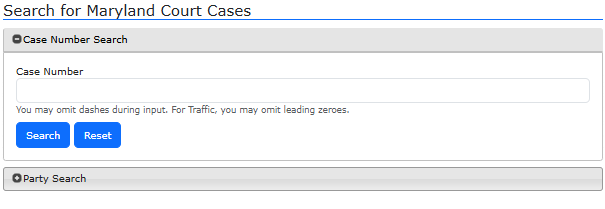
The Case Search form lets you search in different ways:
Search by Case Number :
- If you already have the case number, enter it exactly.
- Ensure you include any hyphens or letters in the number.
- Press Search or hit Enter.
Search by Party Name:
- Enter the last name first and then the first name.
- For broader results, you can use a wildcard (
%) after part of the last name.- Example:
Smith%will return names starting with “Smith.”
- Example:
- Leave the first name blank if uncertain.
Search by Filing Date or Case Type:
- Some search forms let you add filters like filing date range or case type (civil, criminal, traffic).
- Choose the relevant case category from dropdowns if available.
Review Search Results
- After submitting your query, the system displays a list of cases matching your criteria.
- Click on any case to see its docket history, including:
- Case number
- Filing date
- Party names
- Motion filings
- Hearing schedule
- Court orders and case status
Narrow Search for Better Results
- If too many cases appear, add more details (full last name, exact filing year).
- For names, try using partial search with wildcard (%) at the end of a last name for broader match.
Types of Court Filings You Can Track
The Prince George’s County Court Docket allows users to monitor a variety of court filings and motions, providing a clear view of case activity. These records document legal actions and procedural steps, showing what has been submitted to the court and when. By reviewing court document updates, parties, attorneys, and the public can track case updates, see the progress of motions, and follow scheduled hearings. Monitoring filings is essential for staying informed of deadlines, court decisions, and any upcoming hearing lists relevant to a case.
Court Filings
Court filings encompass all official documents submitted to the court throughout the life of a case. These filings create the formal record of the case and are critical for ensuring transparency, procedural fairness, and legal accountability. They are routinely listed in the family division docket lookup system, allowing litigants, attorneys, and the public to review the progression of the case. Understanding the types of filings and their purpose helps parties stay organized, anticipate legal steps, and prepare appropriate responses. Common types of court filings include:
- Complaints or Petitions: The initial documents that start a civil or family case, outlining the issues, claims, and relief requested. These filings set the stage for the legal process and establish the framework for all subsequent proceedings.
- Answers or Responses: Submitted by the opposing party to address allegations or requests in the complaint or petition. Properly filed answers are crucial for protecting legal rights and framing the arguments for trial or negotiation.
- Motions: Requests for the court to take a specific action, which may affect scheduling, case outcomes, or procedural matters. Motions guide the court’s management of the case and can significantly influence how and when disputes are resolved.
- Amendments or Additional Filings: Updates, corrections, or supplemental information to previously submitted documents. These ensure the court record remains accurate and reflect changes in circumstances or legal strategy.
Understanding Motions
Motions are a critical type of filing used to request that the court make a decision or take specific action on a particular matter. They help parties resolve procedural issues, clarify legal questions, and address disputes without waiting for trial outcomes. Monitoring motions in the docket allows parties to anticipate decisions, prepare supporting arguments, and respond promptly to any court actions. Motions play a strategic role in litigation, often shaping case outcomes and influencing how disputes are resolved before trial. Understanding their purpose and timing is essential for anyone involved in court proceedings. Common motion types include:
- Motion for Summary Judgment: Requests the court to rule on the case without a trial based on the facts and evidence presented. This motion can significantly shorten litigation if the court finds no genuine dispute exists.
- Motion for Continuance: Seeks a delay in a hearing or trial, often due to scheduling conflicts, unavailability of witnesses, or the need for additional preparation. Timely filing and justification are crucial for approval.
- Motion to Dismiss: Requests the court to dismiss the case or a specific claim for legal or procedural reasons, such as lack of jurisdiction, insufficient evidence, or failure to state a claim.
- Other Procedural Motions: Can include motions to compel discovery, motions in limine to limit evidence, or motions to amend pleadings. These motions ensure that both parties have a fair opportunity to present their case and that procedural rules are properly followed.
Hearing Lists
The hearing list is a schedule showing when motions, trials, or other proceedings are set to occur. Each docket entry includes the date, time, and courtroom, along with references to relevant filings. By reviewing hearing lists, users can:
- Confirm upcoming court appearances.
- Track the timing of motions or other actions.
- Understand which filings are being considered in a given session.
Hearing lists are updated regularly in the docket, allowing users to follow court document updates and plan accordingly. Monitoring court filings and motions through the docket ensures that parties remain informed, maintain compliance with deadlines, and have a clear understanding of ongoing legal proceedings. By using the online docket system, users can access accurate, timely, and organized records of all legal submissions in Prince George’s County cases.
What are Case Status & Updates
The Prince George’s County Court Docket provides a comprehensive record of case filings and the hearing list, showing the current stage and activity of legal matters. It allows attorneys, parties, and the public to track case status updates in real time. Users can view motions, scheduled hearings, and court decisions without visiting the courthouse. By keeping an eye on the docket, individuals can plan for upcoming proceedings and monitor the progress of filings. The system is designed to organize all case activity clearly, making it easier to interpret court document updates.
Reading a Docket Entry
A docket entry provides a detailed record of all actions and filings in a court case. Each entry is organized to give a clear picture of the case’s progress, helping attorneys, litigants, and the public follow procedural developments. By understanding how to read a docket, users can track hearings, filings, and decisions efficiently, ensuring they stay informed about important dates and outcomes. Structured information in each entry allows for transparency, consistency, and easier case management. Knowing the meaning of each section helps prevent confusion when reviewing court records. Key sections include:
- Outcome/Status: Displays results like granted, denied, continued, or pending.
- Date: Shows when the filing or hearing occurred.
- Case Number: Unique identifier for the case.
- Parties: Names of individuals or entities involved in the case.
- Filing Type: Indicates the type of submission, such as a complaint, motion, or response.
- Event Description: Details the action taken in the case.
- Hearing List: Shows scheduled court appearances or hearings.
Case Status Terminology
Docket entries use standard terminology to indicate case progress. Terms like Pending show that a matter is active, while Continued indicates a hearing or trial has been rescheduled. Dismissed reflects cases or claims removed from the court’s calendar, and Closed means the matter has reached a final judgment. Other terms, such as Judgment Entered, signify that the court has made a ruling on a motion or claim. Knowing these terms helps users follow case filings, anticipate upcoming hearings, and understand what actions have occurred or are scheduled next. Familiarity with docket terminology also aids attorneys and litigants in planning legal strategies and meeting deadlines. It ensures clarity when communicating about a case with the court or other parties. Additionally, it helps the public and researchers accurately interpret case history and status updates.
How to Stay Updated
Staying informed about your case is essential to ensure deadlines are met and actions are not missed. The Prince George’s County courts provide multiple official channels for monitoring case status and filings. By using these resources, users, attorneys, and interested parties can track developments efficiently and plan accordingly. Regularly checking updates also helps avoid surprises and ensures compliance with procedural requirements. Key ways to stay updated include:
- Online Portal: Access the most accurate and current information at Maryland Case Search.
- Email or Portal Notifications: Registered users and attorneys can receive automatic alerts when new filings or court actions are posted.
- Subscriptions for Case Updates: Some courts offer subscription services for notifications on specific case types or dockets.
- Daily or Weekly Hearing Lists: Reviewing these lists provides a snapshot of upcoming motions, hearings, and proceedings.
- Direct Communication with the Clerk’s Office: Contacting the Clerk can clarify status updates or provide additional guidance for specific cases.
Location & Court Contact Information
The Prince George’s County Circuit Court is the main courthouse for statewide civil, criminal, family, and probate matters in Prince George’s County. This courthouse is where most court filings and hearings take place, and it’s also where users can physically view the official hearing list or request copies of court documents that may not be available online. Visiting the courthouse or contacting court staff in person can help users get clarification about case details, filing requirements, or any procedural questions they may have.
Courthouse Address & Directions
The official address for the Prince George’s County Circuit Court is:
14735 Main Street, Upper Marlboro, MD 20772.
This location houses the Circuit Court and related court divisions. It is accessible by car and has public parking nearby. If using local public transportation, several bus routes travel through Upper Marlboro with stops within walking distance of the courthouse entrance. Mapping services like Google Maps can provide real-time directions, estimated travel time, and transit options for users planning their visit.
Court Hours & Contact Details
The courthouse generally operates Monday through Friday, from 8:30 AM to 4:30 PM, excluding legal holidays. By calling ahead, users can confirm specific service hours, verify courtroom locations, or learn whether staff can assist with case filings and docket details.
Key contact details for the Circuit Court and Clerk’s Office include:
- Main Phone: (301) 952‑3655
- Clerk of the Circuit Court: (301) 952‑3318
- Toll‑Free (in Maryland): 800‑937‑1335
- Fax: (301) 952‑3768
- TTY (for hearing‑impaired users): 301‑952‑3925
When In‑Person Access May Be Needed
Most court filings and docket entries are available through official online systems like the Maryland Judiciary Case Search. However, some records — such as sealed cases, old archived files, or certain probate documents — may require an in‑person visit to the courthouse. In‑person access is also necessary when requesting certified copies, reviewing exhibits, or obtaining transcripts. Court clerks can provide guidance on the exact procedures and fees for these services when contacted or visited during courthouse hours. Providing accurate, up‑to‑date Prince George’s County Court location details helps users plan their visit, get in‑person support, and access the right court services efficiently.
Frequently Asked Questions
The Prince George’s County Court Docket Search is a valuable tool for anyone looking to track case progress, monitor filings, and stay informed about upcoming hearings. It provides organized, online access to case filings, motions, and the hearing list for cases in Prince George’s County. This FAQ section answers common questions about the docket system, helping users understand how to use the portal effectively and interpret the information available. Whether you are an attorney, party to a case, or a member of the public, these questions and answers provide detailed guidance for navigating the online court records and staying updated on legal proceedings.
How do I find my case in Prince George’s County Court?
To find a case, users can visit the official Maryland Judiciary Case Search at https://casesearch.courts.state.md.us. The search can be performed using the case number, party name, or filing date. Entering precise details ensures accurate results. Once found, the docket shows all case filings, motions, and scheduled hearings. Users can track upcoming court dates, review court orders, and verify procedural steps. The portal eliminates the need for frequent courthouse visits and allows users to view hearing lists and court document updates from any location. This method ensures that parties stay informed about all developments in their case efficiently and securely.
What information is available in a court docket?
A court docket contains detailed records of a case’s progress. Users can see case filings, motions, scheduled hearings, case numbers, and the names of parties involved. Each docket entry often includes the filing type, event description, and outcome of specific actions. Some entries also display judgments, court orders, or notes about rescheduled hearings. By reviewing these entries, attorneys, parties, and the public can understand the timeline of events and track court decisions. Accessing the docket helps users prepare for hearings, respond to motions, and verify deadlines. It acts as an official record of all procedural activity, giving a comprehensive overview of the case status.
Can I access court dockets online for free?
Yes, the Prince George’s County Court Docket Search is freely accessible through the Maryland Judiciary Case Search portal. Users can search by case number, party name, or filing date without paying any fees. The online system provides real-time updates for motions, filings, and hearing lists, allowing users to stay informed. However, certain records, like sealed cases or certified copies, may require an in-person request at the courthouse and could involve administrative fees. For everyday tracking and reviewing standard case filings, the online docket is fully free and reliable. Users can access it anytime to monitor court activity without visiting the Clerk’s Office.
How often are dockets updated?
Court dockets in Prince George’s County are typically updated daily to reflect new case filings, motions, or changes to the hearing list. Updates ensure users have the most current information about case activity, including scheduled court dates and procedural actions. Attorneys and parties rely on these updates to prepare for hearings, submit responses, or monitor court decisions. While the online docket provides timely information, critical dates should also be confirmed with the Clerk’s Office. Daily updates, combined with online access, make it easy for users to track case progress and ensure they do not miss important filings, motions, or scheduled hearings.
What if I can’t find my case in the docket?
If a case does not appear online, first verify the spelling, case number, and filing year. Some records may be sealed, restricted, or not yet processed in the system. In such situations, users should contact the Clerk of the Circuit Court or visit the courthouse in person. The Clerk’s Office can confirm whether the case is under restricted access or provide guidance on accessing records. This ensures that parties, attorneys, or interested members of the public can still track case filings, motions, and hearing lists. Correct identification and communication with court staff are key to locating the right case efficiently.
Are motion filings included in the docket?
Yes, most motions are listed in the docket, including requests for continuances, summary judgment, dismissals, and other procedural actions. Each motion entry provides the filing date, parties involved, and the scheduled hearing if applicable. Tracking motions helps users understand the case’s progress, anticipate court decisions, and prepare necessary responses. By reviewing these entries, parties can confirm which motions have been filed, granted, or denied. The docket ensures transparency by listing all significant filings and updates. Using the docket lookup tool, users can access a comprehensive record of motion filings, supporting informed decisions and efficient case management.