Prince George’s County court records search allows residents, attorneys, employers, and researchers to review official case information filed within local courts. These public files contain details such as case numbers, party names, hearing dates, filed motions, and final judgments across civil, criminal, family, traffic, and probate matters. Court documentation creates a factual timeline of legal activity that supports fair decision making and informed background review. Many people rely on these records to confirm legal status, check dispute history, or prepare for court proceedings. Public visibility into court activity strengthens trust in the justice system and helps prevent misinformation. State transparency rules in Maryland keep most adult court filings open for inspection, though sealed, expunged, or juvenile matters remain restricted to protect privacy and safety. Clear record availability helps the community stay aware of legal outcomes that may affect employment, housing, business agreements, or family responsibilities. Reliable court data offers a dependable source of verified information drawn directly from court proceedings rather than secondhand reports or informal claims.
Prince George’s County court records search on this page explains where records come from, what details they contain, and how the public may request copies through approved court channels. Readers will find practical direction for locating case files, reviewing hearing outcomes, and checking record status across district and circuit courts. The content outlines common record categories, legal limits on sealed information, and standard request steps used by clerks and online court systems. Clear explanations help users move through the search process with confidence and accuracy. This resource supports background review, legal preparation, journalistic research, and general public awareness tied to local court activity. Each section focuses on factual court procedures, record availability, and lawful use of public information so readers can rely on verified details taken from official judicial sources within Prince George’s County.
How to Search Prince George’s County Court Records
A Prince George’s County case search helps users find official filings, hearing dates, and final rulings through trusted court systems. The steps below explain how to complete a full court lookup using online databases, clerk offices, courthouse terminals, and certified document requests in Prince George’s County Court. Following the correct process improves accuracy and saves time. Each step below works together to support safe document retrieval for civil, criminal, family, traffic, and probate records.
Use the Official Maryland Judiciary Case Search
The fastest online lookup uses the public case search system managed by the Maryland state court system. This free database allows users to search many non-sealed court records across the state.
Official website URL: https://casesearch.courts.state.md.us/casesearch/
Court Records Search
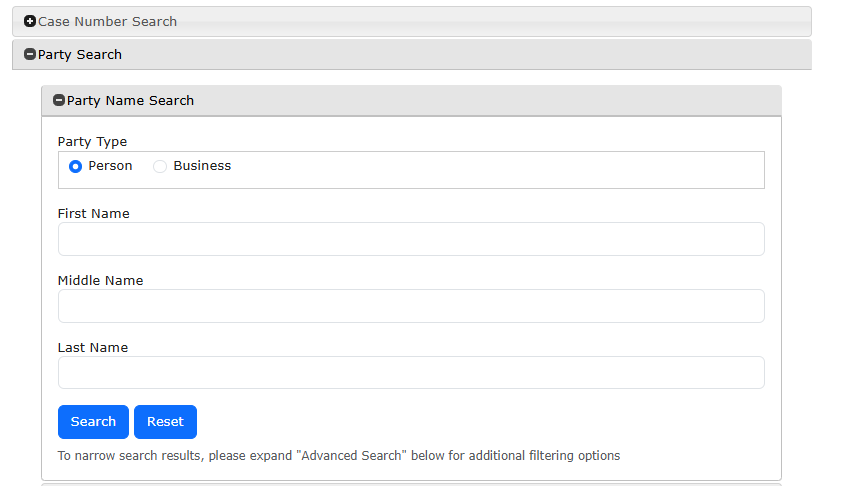
Follow these exact steps to run a successful search:
Instructions
- Open the official website listed above.
- Read the public notice and select “Continue” to enter the system.
- Choose a search method:
- Person name
- Business name
- Case number
- Court location
- Enter the required details:
- Full or partial first and last name, or
- Exact case number if known
- Select the court type or county to narrow results.
- Click the search button to view matching cases.
- Review the results list showing:
- Case status
- Filing date
- Charge or claim type
- Court location
- Upcoming hearing dates
- Select a case number to open the full docket record.
- Read each docket entry for motions, rulings, and outcomes.
- Write down the case number if a certified copy will be requested later.
Search Through Clerk of Court Office
If the online database does not show the needed file, contact the Clerk of Court for manual record retrieval. Clerk staff can confirm record availability and produce copies allowed by law.
Provide:
- Party name or case number
- Filing year or court division
- Photo identification
- Payment for copy or certification fees
In-Person Record Search at Courthouse
Some older or detailed files remain available only at courthouse public terminals. Visiting the courthouse allows full docket review and archive searches. Bring identification, case details, and payment for faster service.
During a courthouse visit, users can:
- Use public computer access terminals
- Request archived paper files
- Review full docket histories
- Order printed or certified documents
How to request certified copies
- Obtain the correct case number from the case search system.
- Contact the Clerk of Court by mail, phone, or in person.
- Submit a copy request form with payment.
- Wait for processing, which varies by record age and workload.
- Receive the certified document by pickup or mail delivery.
What Public Records Exist in Prince George’s County
Prince George’s County maintains many public records that document property ownership, life events, business activity, court filings, and government actions. These records help residents confirm legal status, review ownership history, obtain certificates, and track official filings within Prince George’s County. Public record systems support transparency and accurate recordkeeping across local and state agencies. The sections below explain the major record categories available to the public and what details each type may contain.
Property & Land Records
Property and land records document ownership history, transfers, deeds, and parcel details tied to real estate. Buyers, lenders, attorneys, and researchers review these files to confirm legal ownership and prior transactions. These records help verify lawful ownership and reveal past financial claims connected to a property.
Common property record contents include:
- Deeds and title transfers
- Mortgage and lien filings
- Parcel maps and boundary descriptions
- Assessment values and tax history
- Subdivision plats and land surveys
Vital Records (Birth, Death, Marriage)
Vital records capture major life events recorded by government agencies. Certified copies often support identity verification, legal benefits, and family history research across Maryland. Access rules vary based on relationship to the person named and the age of the record.
Typical vital record certificates include:
- Birth certificates with parent and location details
- Death certificates listing date, place, and cause
- Marriage certificates confirming legal unions
- Divorce documentation recorded through courts
Business Filings, Licenses & Permits
Business public records track company formation, licensing, and regulatory compliance. Entrepreneurs, partners, and consumers review these filings to confirm lawful operation. These records confirm whether a business meets local and state requirements.
Common business record examples include:
- Business registration filings and status
- Trade name or corporation documents
- Professional and occupational licenses
- Building permits and zoning approvals
- Regulatory compliance certificates
Court-Related Public Records
Court-related public records include case filings, judgments, liens, and legal orders created during judicial proceedings. These documents support background review, legal research, and dispute verification. Some files remain restricted if sealed, expunged, or tied to minors.
Examples of court-connected records:
- Civil and criminal case summaries
- Judgment and lien filings
- Protective or peace orders
- Probate estate documents
- Appeal decisions and rulings
How to Request or Obtain Public Records
Residents and businesses can request public records, obtain copies, and review official files through several approved methods in Prince George’s County. Each request option—online, mail-in, or in-person—follows clear procedures that support lawful record access and accurate document delivery. Choosing the right request method helps reduce delays and avoids incomplete applications. The sections below explain how each process works, what details to provide, and how fees or certification affect delivery time.
Online Record Requests
Many agencies provide secure portals that allow users to request public records without visiting an office. Online systems often support case lookup, property searches, permit records, and document copy orders. Online requests often provide the fastest response when records already exist in digital form.
Typical online request steps include:
- Locate the correct government department or record database.
- Enter identifying details such as name, address, case number, or filing date.
- Select the document type and preferred copy format.
- Submit payment through an approved electronic method.
- Receive confirmation and wait for digital delivery or pickup notice.
Mail-In or Written Requests
Some public records require a formal written request sent by mail or email. This method works well for archived files, certified documents, or detailed research requests. Agencies review the request, calculate fees, and respond with approval, denial, or clarification.
A complete written request usually includes:
- Full name and contact information of the requester
- Clear description of the requested record
- Case number, property address, or date range if known
- Preferred copy type (standard or certified)
- Payment by check or money order when required
In-Person Office Requests
Visiting a government office allows direct help from staff and immediate record searches through public terminals or file archives. This option helps when records are older, unclear, or missing from online systems. Bringing identification and detailed record information speeds up service.
During an in-person visit, requesters may:
- Speak with records staff for search assistance
- Review paper or digital files on-site
- Submit copy or certification forms
- Pay fees and receive same-day documents when available
Fees, Processing Times, Certified Copies
Public record requests often include copy fees, search costs, or certification charges. Prices vary by agency, document length, and whether the copy carries an official seal. Certified copies may take longer since staff must verify and stamp the document. Requesting accurate record details at the start helps reduce extra costs and wait times.
Common expectations include:
- Per-page copy fees for printed documents
- Certification charges for legally recognized copies
- Search or archive retrieval fees for older files
- Processing times ranging from same day to several business days
Vital Records Access
Vital records in Prince George’s County include official certificates for birth, death, and marriage and divorce records filed with state and local agencies. These documents support identity verification, legal benefits, family history research, and government recordkeeping within Prince George’s County. Request procedures depend on the record type, eligibility status, and identification rules set by Maryland authorities. The sections below explain how to request each certificate and what proof is required before release.
Birth Certificate Requests
Birth certificates confirm date of birth, place of birth, and parent information recorded at the time of delivery. Certified copies often support school enrollment, passports, and legal identification. Processing time varies based on request method and record age.
Common request steps include:
- Submit an application through the state vital records office or approved local agency.
- Provide the full name on the record, birth date, and place of birth.
- Present valid government photo identification.
- Pay the required certificate fee.
Death Record Copies
Death certificates document date, location, and cause of death, along with funeral and filing details. Families, attorneys, and financial institutions often require certified copies to settle estates or insurance matters. Some recent records may carry short privacy limits before public release.
Typical request requirements include:
- Name of the deceased and date of death
- Relationship to the deceased or legal interest
- Valid identification from the requester
- Payment for certified copy fees
Marriage Certificate Access
Marriage certificates verify a legal union, ceremony date, and officiant record filed with the court or vital records office. Certified copies often support name changes, benefits enrollment, or legal proceedings. Older marriage records may appear in archived county or state databases.
To request a marriage certificate, applicants usually must:
- Provide names of both spouses and marriage date
- Submit identification and application form
- Pay copy or certification fees
Eligibility Rules & ID Requirements
All requests require valid government-issued identification and accurate application details. Missing information may delay processing or prevent record release. Maryland law limits who may receive certified vital records. Access usually applies to:
- The person named on the certificate
- Parents, spouses, or legal guardians
- Attorneys or authorized representatives
- People with documented legal interest
Business Records, Licenses & Permits
Business records, licenses, and permit filings document lawful commercial activity, professional approval, and land-use compliance in Prince George’s County. These public files help residents confirm company status, verify credentials, and review construction or zoning permissions tied to a location or service. Government agencies maintain these records to support transparency, consumer protection, and regulatory enforcement. The sections below explain how to review business registration data, professional licensing files, and local zoning or construction permits.
Business Registration Lookup
Business registration records confirm that a company is legally formed and authorized to operate. These filings often list business name, registration date, entity type, status, and registered agent information. Accurate registration data helps customers, partners, and lenders confirm legitimacy before entering agreements.
Users commonly search registration records to:
- Verify an active or inactive business status
- Confirm ownership or management details
- Review formation dates and filing history
- Check trade names or corporate structure
Professional Licensing Records
Professional licensing records show whether a worker or company holds valid approval to provide regulated services. Licensing applies to fields such as construction, healthcare, real estate, and skilled trades. Reviewing these records helps the public confirm qualifications and avoid unlicensed service providers.
Typical licensing record details include:
- License holder name and license number
- Issue and expiration dates
- License status, restrictions, or disciplinary actions
- Governing board or issuing authority
Zoning, Construction & Permit Filings
Zoning and permit records track how land and buildings may be used or modified. Local planning and inspection offices issue permits before construction, renovation, or major property changes begin. These filings protect safety standards and confirm that projects meet local development rules.
Common permit and zoning documents include:
- Building and renovation permits
- Electrical, plumbing, or mechanical approvals
- Zoning classifications and land-use decisions
- Inspection results and code compliance reports
- Certificates of occupancy for completed structures
Laws Governing Public Record Access in Maryland
Public access law in Maryland defines how residents may view, request, and use government and court records. These rules balance transparency with privacy limits to protect sensitive data while keeping many legal records open for review across Maryland. State statutes explain which records remain public, which stay restricted, and how retrieved information may be used. The sections below outline the main legal framework, common confidential record categories, and proper handling of disclosed documents.
Maryland Public Information Act
The Maryland Public Information Act (MPIA) forms the core law controlling public record disclosure. It allows people to request existing government records from state and local agencies, including many court-related files. This law promotes open government operations while maintaining structured review of each request.
Key provisions of the MPIA include:
- The right to request non-confidential government documents
- Required agency responses within defined time periods
- Written explanations when a request receives denial or partial release
- Reasonable search, review, or copy fees tied to record production
Records That Are Not Public
Some documents remain confidential under privacy statutes, court orders, or safety protections. These limits prevent release of information that could harm minors, victims, or protected parties. Agencies must review each request to confirm whether disclosure is legally permitted.
Common restricted record categories include:
- Juvenile court proceedings and youth records
- Sealed or expunged criminal cases
- Adoption and certain family court filings
- Medical, mental health, or protective order details
- Personal identifiers such as Social Security or financial account numbers
Legal Use of Retrieved Records
Public records may be used for research, background review, journalism, or legal preparation when obtained through lawful channels. Responsible use protects privacy rights and prevents misuse of disclosed information. Failure to follow legal use standards may result in penalties under state or federal law.
Proper handling of retrieved records includes:
- Using information for lawful and factual purposes only
- Avoiding harassment, discrimination, or false representation
- Respecting sealed or confidential status when indicated
- Following court or agency rules tied to redistribution or publication
Overview of Public Records in Prince George’s County
Prince George’s County public records include government records created or stored by local and state agencies during official duties. These files support public access to verified information through approved offices and official databases within Prince George’s County. Public record systems promote transparency, accountability, and accurate documentation of government actions. The sections below explain what qualifies as a public record, which agencies maintain these files, and how users may review them online or in person.
What Qualifies as a Public Record
A public record is any document, file, or recorded data produced or kept by a government agency while performing official work. These materials may exist in paper, digital, audio, or visual form. Some records remain restricted if privacy laws or court orders limit release.
Common examples of qualifying public records include:
- Court filings and case dockets
- Property deeds, land transfers, and tax records
- Vital certificates such as birth, death, or marriage
- Business registrations, licenses, and permits
- Meeting minutes, budgets, and policy documents
Agencies Responsible for Maintaining Records
Multiple government offices manage public records across the county and state. Each agency stores records connected to its legal duties and services. These agencies follow retention schedules and disclosure laws that control storage and release of official documents.
Key record-keeping bodies may include:
- Clerk of the Circuit Court for court and probate filings
- Land records and assessment offices for property ownership data
- Health departments for vital certificates
- Business and licensing agencies for registrations and permits
- County administrative offices for budgets, meetings, and reports
Online vs. In-Person Record Access
Public records may be reviewed through online databases or in-person office visits, depending on record type and availability. Digital systems allow faster searching, though older or restricted files may require a physical request. Choosing the correct method helps users locate Prince George’s County public records with greater accuracy and efficiency.
Online access typically provides:
- Name or case number search tools
- Summary record details and status updates
- Digital copy requests and payment options
In-person access may allow:
- Review of archived or paper files
- Help from records staff during searches
- Immediate certified copy requests when available
Frequently Asked Questions
This section answers common questions about Prince George’s County public records, online searches, property files, vital certificates, business licenses, and copy fees. Clear responses help readers find official information faster and prepare correct requests through government offices and databases. Each answer explains practical steps, legal availability, and expected requirements tied to public records in Prince George’s County. Use these details to plan searches, confirm eligibility, and avoid delays during record requests.
How do I search Prince George’s County public records online?
Searching online begins with official government databases that store court cases, land filings, permits, and business registrations. Start by entering a full name, case number, property address, or business title into the correct public search system. Review the results list carefully, then open the matching record to view filing dates, status details, and document summaries. Some systems show only basic docket information rather than full images. If no result appears, try spelling variations or search another county or state database. Sealed or confidential files will not display in public results. After locating the correct entry, write down the reference number so a certified copy request can be completed through the appropriate clerk or agency office without repeating the full search again.
Are property records public in Maryland?
Most property ownership records remain open to the public across Maryland. Land record systems store deeds, mortgages, liens, plats, and transfer history connected to each parcel. These files allow buyers, lenders, attorneys, and residents to confirm legal ownership and prior financial claims. Public systems usually hide sensitive financial account numbers or private identifiers, though ownership names and transaction dates stay visible. Searches may occur online through statewide land databases or in person at a county clerk office using public terminals. Older historical deeds may require archive retrieval. Certified copies carry legal proof of ownership and often support real estate sales, refinancing, inheritance transfers, or court proceedings that depend on verified land documentation.
How can I get a birth or death certificate?
Obtaining a certified birth or death certificate requires submitting an application through a state or county vital records office. The requester must provide the full name listed on the certificate, the event date, and the location where it occurred. A valid government photo ID is required to confirm identity. Recent records usually release only to close family members, legal representatives, or people with documented legal interest. Payment of a certificate fee is required before processing begins. Requests may be submitted online, mailed to the records office, or completed in person at a service counter. Processing time depends on record age and request volume. Certified copies include an official seal that allows use for legal identification, insurance claims, estate settlement, and government benefit applications.
Where are deeds recorded?
Property deeds are officially recorded through the land records division managed by the circuit court clerk serving Prince George’s County. This office preserves ownership transfers, mortgage filings, subdivision plats, and lien documents tied to each parcel of land. Recording creates a permanent legal history that protects buyers and lenders from ownership disputes. Public search terminals inside the courthouse allow visitors to review deed indexes and document references. Many newer filings appear in online land record databases for remote searching. Certified deed copies may be requested for a fee and include an official stamp verifying authenticity. Accurate recording keeps the property system organized and allows courts, title companies, and residents to confirm lawful ownership whenever a sale, refinance, or inheritance transfer occurs.
Are business licenses searchable online?
Many business registrations and professional licenses can be reviewed through searchable government databases that list company status, formation date, license number, and expiration details. These systems help customers confirm whether a company operates legally before signing contracts or making payments. Searches usually begin with a business name or owner name entered into a statewide registration portal or licensing board website. Results may include disciplinary actions, inactive status, or renewal history. Some professions maintain separate regulatory boards, so checking multiple databases may be required for full verification. If online results appear incomplete, a written request to the licensing agency may provide confirmation. Verified license information protects consumers and supports fair commercial activity across regulated industries within the county and state.
What fees apply for copies?
Public record copy fees depend on the agency, document length, certification status, and delivery method selected during the request. Standard photocopies often carry a small per-page charge, while certified copies include an added fee for the official seal and clerk authentication. Archive retrieval or extended record searches may increase total cost when older files require manual handling. Mail delivery can add postage or handling charges. Payment methods commonly include card, cash, or money order based on office policy. Processing time may range from same-day service to several business days depending on workload and document location. Requesting the exact case number, property reference, or certificate details before submitting payment helps prevent extra search fees and reduces delays in receiving the final document.